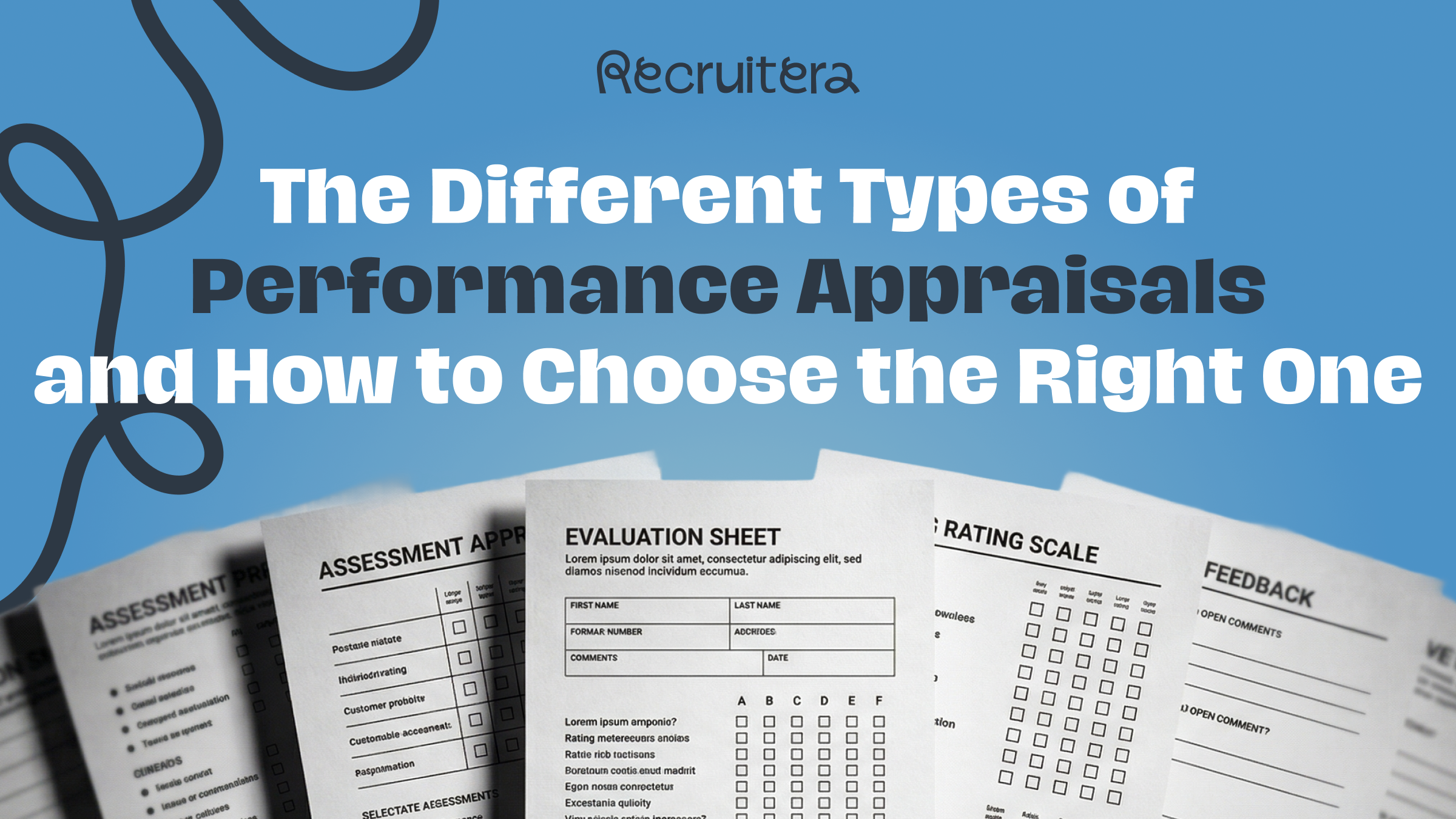

Different types of performance appraisals play a key role in shaping how employees grow, how teams perform, and how overall business results improve.
At Recruitera, we believe appraisal systems should do three things: make employee performance visible, guide development, and help managers take practical action rather than create paperwork.
Why Appraisal Type Matters
Annual performance reviews, the old standard, often don't move the needle — just a small percentage of HR leaders say their systems actually motivate better performance. The appraisal structure you choose affects how people experience feedback, where managers spend their time, and whether your performance management effort improves real outcomes.
Types of Performance Appraisals
The Self-Assessment
One of a manager's most empowering tools. It asks employees to reflect on their own accomplishments, challenges, and goals before the official review meeting. This perspective is important because it often uncovers differences between a manager's view and the employee's experience, enabling deeper and more candid discussions.
Full-Circle Feedback (360-Degree)
Gathers opinions from direct reports, peers, and even clients to provide a comprehensive, three-dimensional view of an individual's influence. By combining feedback from multiple human touchpoints, you reduce individual bias and gain a richer understanding of an employee's contribution to team culture.
Management by Objectives (MBO)
Managers and employees set clear, measurable objectives for a specific period. The focus is on outcomes rather than the methods used to achieve them. This results-driven approach is particularly valuable for high-growth teams, where clarity on objectives helps keep everyone aligned and accountable.
Behaviorally Anchored Rating Scales (BARS)
The gold standard in performance appraisal precision. This method combines narratives and quantified ratings by anchoring a numerical scale to specific behavioral examples. Instead of rating "Communication" from 1 to 5, a BARS scale defines what "Level 5" communication looks like — such as consistently facilitating clear cross-departmental updates and resolving conflicts. It minimizes subjectivity.
Psychological Appraisals
Frequently employed to find high-potential individuals for leadership positions. Involves a thorough examination of a person's cognitive, emotional, and personality qualities to forecast future work performance instead of merely analyzing historical data.
Continuous Feedback (Check-ins)
The most significant trend in HR tech today. Instead of a single, high-stakes performance review, managers conduct frequent, low-pressure check-ins. This allows for real-time adjustments, identifying challenges early rather than waiting for an annual review.
How to Choose the Right Appraisal Type
Use this checklist to match your goals with the appraisal style that fits best:
- Are you measuring outcomes or behaviors? → Choose MBO or BARS.
- Is speed and iteration important? → Use continuous feedback or project reviews.
- Need a rounded view of leadership? → Add 360-degree feedback.
- Want to reduce bias and admin time? → Standardize with scales and surface data via your HR tools.
Three Practical Rules for Reliable Appraisal Systems
- Evidence over impressions: Capture examples, metrics, and outcomes for every review.
- Frequent short touchpoints: Pair formal reviews with quick check-ins to ensure timely feedback.
- Close the loop: Document areas for improvement and track them as part of development cycles.
Sample Conversation Prompts for Managers
- "What outcome from the last quarter are you most proud of, and why?" (self assessment)
- "Tell me one incident that shows strong customer ownership." (critical incident)
- "Which one of these objectives would you keep, adjust, or remove next quarter?" (MBO / continuous)
Conclusion: Make Appraisal Design Part of Your Talent Strategy
At Recruitera, we offer continuous feedback systems, rating scales, behavior-based scales, and data-driven insights that connect the hiring process to actual job performance.
Frequently Asked Questions
What are the most common types of performance appraisals? Self-assessments, 360-degree feedback, MBO, BARS, psychological appraisals, and continuous feedback. Each fits different roles and goals.
How do I choose the right appraisal type for my team? Focus on what you need to measure, how often, and the level of insight. Continuous feedback suits fast-moving teams; MBO or BARS works for results-driven roles.
جاهز للتوظيف بذكاء أكبر؟
يساعدك ريكروتيرا على رؤية الشخص وراء السيرة الذاتية. احجز عرضًا توضيحيًا سريعًا واكتشف طريقة أفضل لبناء فريقك.
احجز عرضًا توضيحيًا


مركز المعرفة الأول لمسؤولي التوظيف.
تصفّح الموارد ←أدلة عملية حول استقطاب المواهب وإجراء المقابلات وبناء العلامة التوظيفية في المنطقة.
اقرأ المدونة ←أوصاف وظيفية وخطابات عروض عمل وبطاقات تقييم للمقابلات وقوائم تهيئة الموظفين الجدد، جاهزة للنسخ.
تصفّح القوالب ←