Mass Hiring in Egypt: How to Recruit Hundreds of Employees Without Losing Quality
Learn how to manage mass hiring in Egypt without sacrificing candidate quality. A practical, step-by-step guide for HR and TA teams scaling recruitment.

Hiring 10 people and hiring 300 people are not the same job. They just look similar on a headcount spreadsheet.
When a company needs a handful of roles filled, one recruiter can manage the process by memory. When that same company needs 200 customer service agents or 150 warehouse workers in six weeks, everything changes. Applications pile up by the thousand, screening becomes repetitive, hiring managers ask for updates faster than recruiters can give them, and candidate data ends up scattered across spreadsheets, WhatsApp threads, email chains, and job board inboxes.
The real challenge of mass hiring in Egypt isn't finding enough candidates. It's maintaining quality, consistency, and control while hiring at scale.
What Is Mass Hiring?
Mass hiring, also called high-volume recruitment, means filling a large number of similar roles within a short timeframe. It's common across Egypt's fastest-growing sectors: a BPO opening a new floor of 200 customer service representatives, a retail chain staffing five new branches at once, a logistics company building out a delivery fleet, or a manufacturer ramping up a new production line. With Egypt's labor force now exceeding 34 million people, the candidate pool keeps growing, but so does the noise recruiters have to filter through.
Traditional recruitment methods, built for hiring one or two people at a time, don't scale well to this kind of volume. A process that works fine for 10 applicants collapses under 3,000.
Why Mass Hiring Is Difficult in Egypt
A few recurring problems show up whenever a company tries to hire at scale, especially for frontline, blue-collar, sales, customer service, retail, or logistics roles.
- Application overload. A single job post can bring in thousands of applications, many from people who do not meet the basic requirements.
- Scattered candidate data. Applications arrive through job boards, WhatsApp, email, referrals, and walk-ins, and end up in different places.
- Slow, repetitive screening. Recruiters spend most of their time on the same first-round checks over and over.
- Candidate drop-off. Frontline candidates often apply to several jobs at once and accept whichever company responds first.
- Interview no-shows. Without confirmations and reminders, a large share of scheduled interviews simply do not happen.
- No visibility for hiring managers. Managers keep asking for updates because there is no shared view of where each candidate stands.
How to Build a Mass Hiring Process That Doesn't Sacrifice Quality
When you're hiring hundreds of people, the goal isn't to move faster at every step. It's to remove the manual work that slows recruiters down while protecting the steps that protect hiring quality.
Step 1: Define requirements before launching. Lock down qualifications, location, salary range, working hours, vacancy count, deadline, and screening criteria upfront. Don't redefine "qualified" halfway through the campaign unless it's truly necessary.
Step 2: Create one central candidate pipeline. Candidates shouldn't live across five spreadsheets and three inboxes. One system showing new, screened, shortlisted, interviewing, offer-stage, and hired or rejected candidates gives the whole team visibility.
Step 3: Automate the repetitive work. Automation belongs in screening, acknowledgements, interview invitations, follow-ups, and reminders. It should remove administrative busywork, not human judgment. The final hiring decision still belongs to a person.
Step 4: Use multiple recruitment channels. Mass hiring rarely succeeds through one source. Job boards, social media, referrals, agencies, universities, career fairs, WhatsApp, and your career page each reach different candidate pools. The goal is pulling them into one manageable pipeline.
Step 5: Standardize screening and interviews. Shared scorecards keep evaluations consistent when multiple recruiters hire in parallel. Speed without consistency leads to poor-quality hires.
Step 6: Track recruitment performance. Watch applications, screening-to-interview ratio, interview attendance, offer acceptance rate, time to hire, source of hire, cost per hire, and drop-off. These numbers show where the funnel is breaking.
How an ATS Helps With Mass Hiring
An Applicant Tracking System becomes more valuable, not just more convenient, as hiring volume grows. It centralizes candidates from multiple sources, filters applicants against defined criteria, automates repetitive communication, keeps recruiters and hiring managers aligned on the same stages, and generates reports the team can act on. Below a certain volume, spreadsheets limp along fine. Above it, they become the bottleneck.
Where Recruitera Fits Into Mass Hiring
Recruitera helps recruitment teams in Egypt and the wider MENA region manage large candidate volumes without losing visibility. It keeps candidate data organized in one pipeline, automates repetitive parts of the workflow, and gives recruiters and hiring managers a shared view of where every candidate stands. For teams running high-volume campaigns, that structure is often the difference between a hiring push that stays on track and one that quietly falls apart. Recruitera doesn't replace recruiters. It gives them the system to manage more candidates without losing control of the process.
7 Best Practices for Hiring Hundreds of Employees
- Start sourcing before the deadline gets close. Build a pool of interested candidates early, so you are not starting from zero when the headcount is approved.
- Use knockout questions at the application stage. Simple yes or no questions on location, availability, or required documents filter out unqualified applicants automatically.
- Make applying easy on mobile. Most frontline candidates apply from a phone. A short form or a WhatsApp-based application brings in far more completed applications than a long desktop form.
- Run group interviews or assessment days. For roles with similar requirements, meeting candidates in batches saves days of scheduling.
- Respond within 48 hours. Speed is your biggest advantage in high-volume hiring. Candidates who wait too long accept another offer.
- Share the workload fairly across recruiters. Distribute candidates automatically so no recruiter is buried while another has spare capacity.
- Keep a silver-medal pool. Strong candidates who just missed out this round are often your fastest hires for the next one.
How to Know If Your Team Is Ready for Mass Hiring
A few warning signs suggest a company needs a more structured process: recruiters buried in spreadsheets, candidates getting lost between channels, inconsistent follow-ups, hiring managers with no visibility into candidate status, the same messages typed out manually over and over, frequent duplicates, and a team that can't easily report on hiring progress because volume has outgrown the tools supporting it.
Conclusion
Mass hiring isn't about lowering the bar to hire faster. It's about building a process that can handle volume without losing consistency, visibility, or candidate quality. That matters even more as Egypt's outsourcing and BPO sector alone added over 90,000 jobs in a single year, a pace few manual recruitment processes were built to handle.
If your hiring team is preparing for its next high-volume recruitment campaign, Recruitera can help you manage the process from sourcing to hiring in one place.
Ready to Hire Smarter?
Recruitera helps you see the person behind the resume. Book a quick demo and discover a better way to build your team.
Book a Demo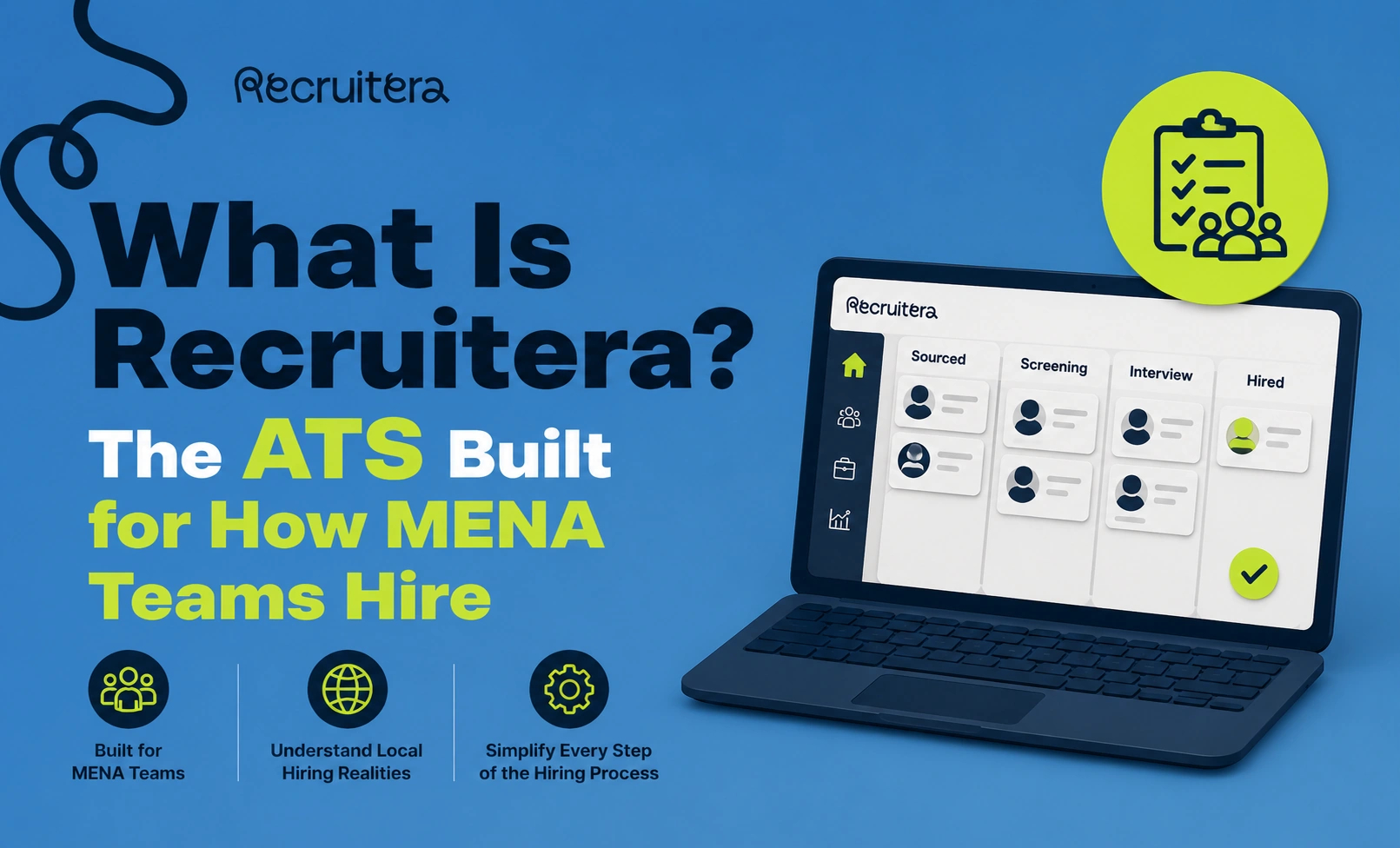
Recruiters' first go-to knowledge hub.
Visit resources →Practical guides on sourcing, interviewing and employer branding in MENA.
Read the blog →Job descriptions, offer letters, interview scorecards and onboarding checklists, ready to copy.
Browse templates →New features, improvements and release notes from the Recruitera team.
See what's new →