What are Fringe Benefits: Calculation, Taxes, and More
Learn what fringe benefits are, how fringe benefits calculation works, and how the right tax-efficient perks support talent attraction and retention.
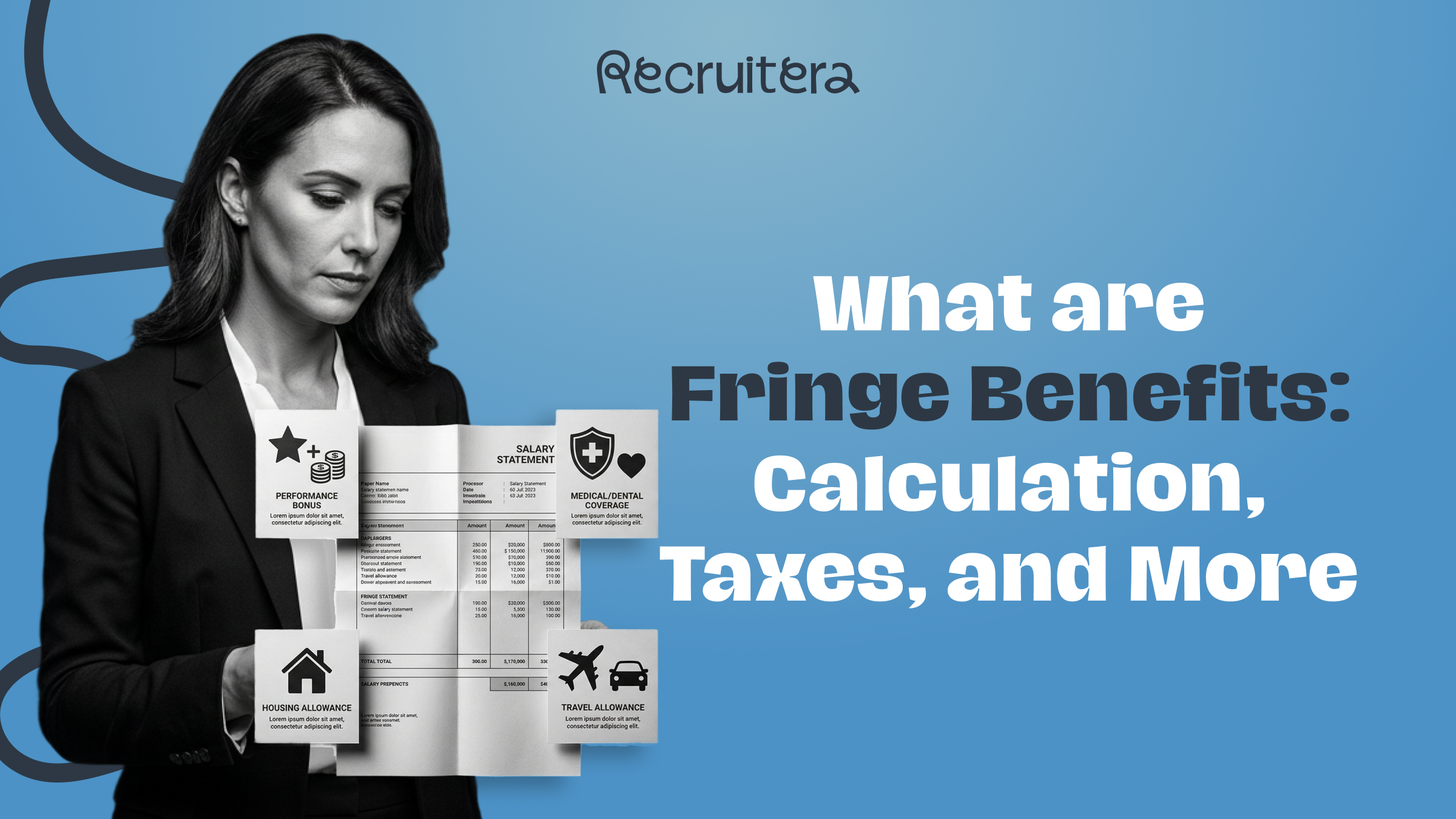

Fringe benefits have become a defining factor in the modern hiring landscape. The conversation between recruiters and potential hires is no longer centered only on base salary. Today's professionals are looking for a more complete partnership — a role that supports their lifestyle, health, and long-term goals.
At Recruitera, we see hiring as the point where intelligence meets intuition. Market data can tell you the standard salary range, but experience shows that people remain where they feel genuinely valued. Knowing how to structure, calculate, and clearly communicate fringe benefits is a core part of a smart recruitment strategy.
What Exactly Are Fringe Benefits?
Fringe benefits are forms of compensation provided to employees in addition to their wages. Think of them as the "extra" layer of value that defines your company culture and support system. Common examples include:
- Health and dental insurance
- Retirement plan contributions (like a 401(k) match)
- Paid time off (PTO) and parental leave
- Employee stock options
- Tuition reimbursement
- Commuter benefits or company cars
While some benefits like workers' compensation and Social Security are mandated by law, others are optional and provided by businesses to entice and keep top people.
Why Fringe Benefits Are a Recruiter's Secret Weapon
Boosting Retention
High workforce turnover is expensive and disruptive. A well-thought-out benefits package acts as "social glue." When an employee's gym membership, mental health support, and child's college fund are tied to their workplace, the cost of leaving becomes much higher than just a salary difference.
Enhancing Employer Brand
In an era of transparent workplace reviews, your fringe benefits speak volumes about your values. Your benefits package is your brand in action.
Tax Efficiency for Both Sides
For the employer, many fringe benefits are tax-deductible. For the employee, many benefits are received tax-free or tax-deferred. This allows you to increase the "total compensation" value without necessarily increasing the tax burden for the individual.
How to Calculate the Value of Fringe Benefits
- Identify the type of benefit received — cash, cash equivalents, or an in-kind provision.
- Evaluate the statutory exclusion provisions, if applicable, and document eligibility criteria.
- Determine the Fair Market Value (FMV) of noncash benefits.
- Deduct employee contributions, if applicable.
- Include the received amount in the employee's salary and withhold taxes in compliance with local laws.
- Document the method you use and apply it consistently to reduce audit risk.
Valuing Non-Monetary Benefits
Not every benefit has a clear receipt. How do you value a flexible work-from-home policy or "Focus Fridays"? While these don't always show up in a tax calculation, they should be highlighted in your recruitment marketing. They are the "intangible" fringe benefits that often matter most to modern professionals.
Navigating the Tax Landscape
The IRS generally treats fringe benefits as taxable unless the law specifically excludes them.
Commonly Taxable: Working condition fringes that exceed IRS limits, certain moving expense reimbursements, and some types of group term life insurance (above $50,000).
Commonly Non-Taxable (Excluded): Health insurance, de minimis (small) benefits like occasional snacks, employee discounts within certain limits, and qualified transportation fringes.
How Technology Simplifies Benefits Management
When your hiring system integrates with your benefits administration, you can generate "Total Compensation" statements instantly. Instead of saying, "The salary is $100k," you can say, "Your total package value is $135k, including these specific supports for your family and future." This gives recruiters a powerful tool during the offer stage.
Steps to Building a Smart Benefits Package
Audit your current talent needs. Use your hiring analytics to see where you are losing candidates. If people are dropping off during the "benefits" discussion, your package isn't meeting the market.
Lead with empathy. Think about the life stages of your employees. A junior developer might value tuition reimbursement. A senior lead might prioritize robust parental leave or 401(k) matching. A one-size-fits-all approach rarely works.
Communicate the value. Don't bury your fringe benefits in a 50-page PDF handbook. Feature them on your career page, highlight them in outreach emails, and train your recruiters to speak about them with authority and warmth.
Frequently Asked Questions
What counts as a fringe benefit? Any compensation beyond base pay, like health coverage, retirement contributions, PTO, commuter perks, or stock options.
How do I calculate the taxable value? Check if the benefit is excluded by law, determine its fair market value, subtract employee contributions, and report it consistently through payroll.
Which benefits improve retention most? Health insurance, retirement matching, flexibility, and learning support often have the strongest impact.
Ready to Hire Smarter?
Recruitera helps you see the person behind the resume. Book a quick demo and discover a better way to build your team.
Book a Demo

Recruiters' first go-to knowledge hub.
Visit resources →Practical guides on sourcing, interviewing and employer branding in MENA.
Read the blog →Job descriptions, offer letters, interview scorecards and onboarding checklists, ready to copy.
Browse templates →New features, improvements and release notes from the Recruitera team.
See what's new →