Performance Management vs. Performance Appraisal: Why the Difference Matters
Understand performance management vs appraisal: key differences, best practices for employee performance management, and winning strategies.
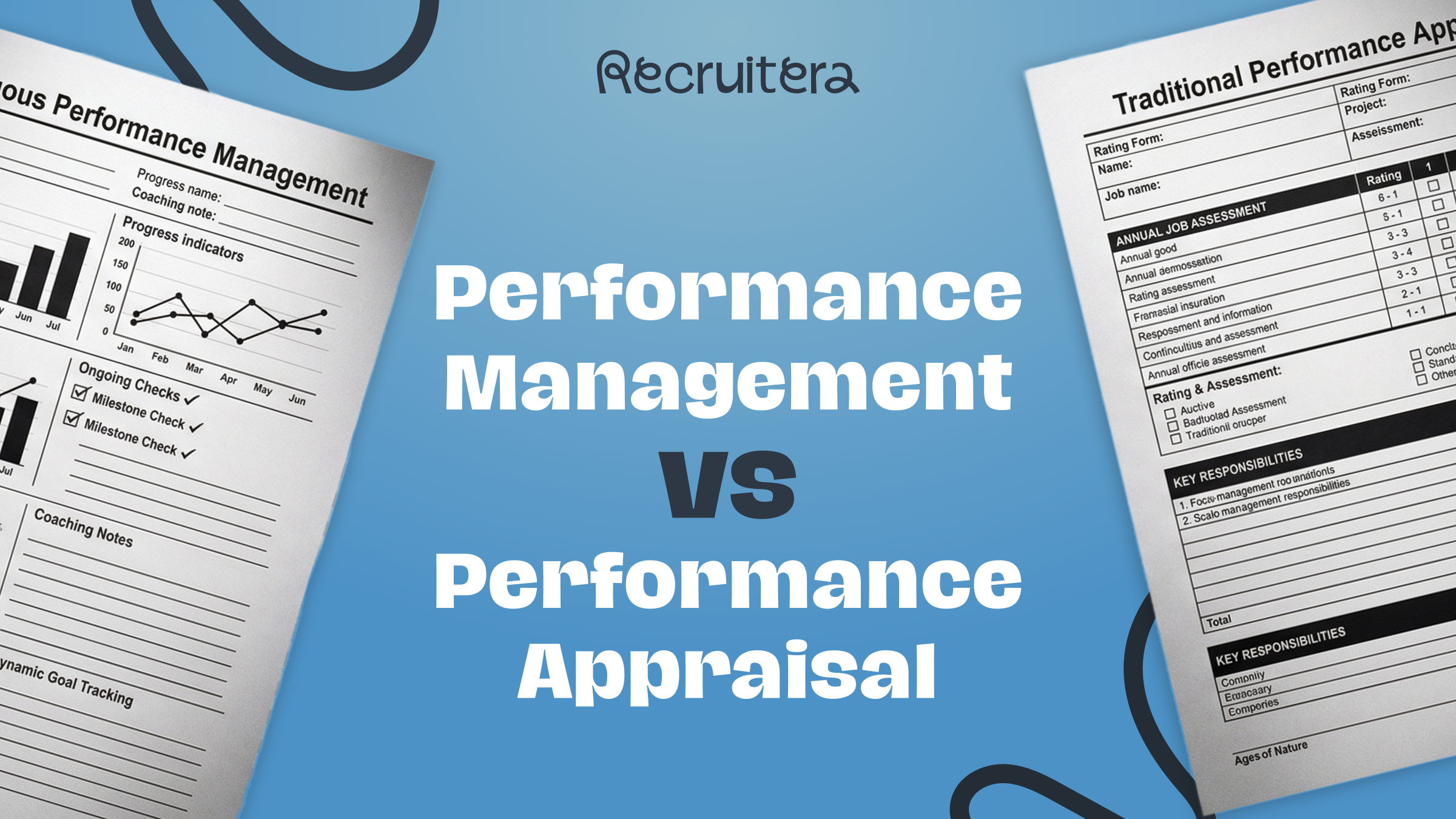

Performance Management vs. Performance Appraisal sets the stage for a common workplace experience: the dreaded annual review. Traditional appraisals often act as backward-looking audits, focusing more on past mistakes than on future growth opportunities.
At Recruitera, we believe performance management should serve as a strategic pulse rather than a mere formality — where growth meets clarity and hiring aligns with insight. By shifting your mindset from "policing" to "mentorship," you unlock the true potential of a performance appraisal.
Performance Management vs. Performance Appraisal
Performance management is the ongoing exchange of information between a professional and a manager. It entails laying out precise expectations, defining objectives, and giving the feedback required to reach them. Unlike the static reviews of the past, modern systems are:
- Data-backed: Moving away from "gut feelings" toward actual insights.
- Empathetic: Understanding that behind every metric is a person with a career journey.
- Practical: Turning evaluations into actionable steps for improvement.
A performance appraisal is the specific moment where we pause to evaluate progress. The most effective teams are moving away from the "once-a-year" model in favor of more frequent, agile conversations — because in a fast-paced world, feedback that is six months old is often irrelevant.
The Role of Intelligence in Measuring Success
Smart workflows change the game by automating reminders, data collection, and documentation. This frees up managers to lead rather than do paperwork. When the manual burden is removed, the performance appraisal becomes a high-value conversation. It allows you to:
- Spot Trends: See which teams are thriving and which need more support.
- Ensure Fairness: AI-driven insights can flag potential biases, ensuring every professional is evaluated on their actual merits.
- Bridge the Gap: Identify specific areas for improvement and match them with development resources instantly.
Best Ways to Make Performance Management More Empathetic
Lead with understanding, not just metrics. Start each discussion with: "How are you feeling about your current projects?" and "What obstacles can I help remove?" before delving into statistics.
Focus on "Smarter, Not Harder." The solution for someone struggling isn't necessarily "work more hours" — often it's better tools or more transparent procedures.
Make it a two-way street. A review should be a conversation, not a sermon. Request input on your leadership style too.
Celebrate the small wins. High-performing teams recognize the daily habits that lead to success, not just the big milestones.
Clarity over complexity. If there's an issue with performance, state it clearly and kindly. Professionals feel more confident when they know exactly where they stand.
Connecting the Dots: From Hiring to High Performance
The secret to excellent performance management starts before the employee is even hired. When you use a smart hiring system like Recruitera, you evaluate candidates based on real hiring outcomes and cultural fit — ensuring the person you bring on board will naturally excel in your environment. Smarter matches lead to stronger teams. When the initial match is precise, the subsequent performance appraisal isn't about fixing "bad hires" — it's about optimizing great talent.
Frequently Asked Questions
What's the difference between performance management and a performance appraisal? Performance management is the ongoing cycle of goals, coaching, and feedback. A performance appraisal is a periodic, formal check that documents past results and informs pay or promotion.
How often should teams get feedback? Aim for brief weekly or biweekly check-ins, monthly goal reviews, and quarterly calibration, so feedback stays timely and actionable.
How do I make reviews feel more human? Lead with empathy, make reviews two-way, celebrate small wins, and end every conversation with one clear next step.
Ready to Hire Smarter?
Recruitera helps you see the person behind the resume. Book a quick demo and discover a better way to build your team.
Book a Demo

Recruiters' first go-to knowledge hub.
Visit resources →Practical guides on sourcing, interviewing and employer branding in MENA.
Read the blog →Job descriptions, offer letters, interview scorecards and onboarding checklists, ready to copy.
Browse templates →New features, improvements and release notes from the Recruitera team.
See what's new →