
Interview scheduling sounds simple.
Until you actually try to coordinate it.
Between recruiters, hiring managers, panel members, and candidates—each with different calendars, time zones, and availability—what should take minutes often stretches into days. Emails pile up. Slots get double-booked. Candidates lose momentum. Hiring managers get frustrated.
For many teams, interview scheduling quietly becomes one of the biggest bottlenecks in the hiring process.
In this guide, we’ll break down why interview scheduling gets messy, what modern hiring teams do differently, and how structured tools—including self-scheduling—eliminate unnecessary coordination friction.
🎮 Try It Yourself: Interactive Interview Scheduling Demo
Before we dive in, see how modern interview scheduling actually works:
(In just 2 minutes, you’ll see how self-scheduling removes back-and-forth emails and lets candidates book their own interview slots.)
Why Interview Scheduling Becomes a Hiring Bottleneck
Most hiring teams don’t struggle with sourcing.
They struggle with coordination.
A typical scheduling scenario looks like this:
1. Recruiter reaches out to candidate
2. Candidate shares availability
3. Recruiter checks with hiring manager
4. Hiring manager proposes different times
5. Recruiter goes back to candidate
6. Calendar conflict appears
7. Process repeats
Multiply that by multiple interview rounds and panel members, and you start losing days—sometimes weeks.
The issue isn’t effort. It’s structure.
Interview coordination involves multiple stakeholders: recruiters, hiring managers, interview panels, candidates, and sometimes HR or leadership. Without visibility into real-time availability, the process becomes manual and reactive.
And manual coordination doesn’t scale.
The Hidden Cost of Poor Interview Scheduling
Interview scheduling delays rarely show up in dashboards immediately—but they compound quickly.
Here’s what slow coordination really costs:
🔹Increased Time to Hire
When scheduling takes 3–5 days per round, your overall hiring cycle stretches unnecessarily. What should be a two-week process becomes a month-long wait.
🔹Candidate Drop-Off
Strong candidates move fast. If your process feels slow or disorganized, they assume the company operates the same way. By the time you finally schedule the interview, they’ve already accepted another offer.
🔹 Internal Friction
Recruiters and hiring managers start blaming each other for delays—when the real issue is the system. This creates tension in what should be a collaborative process.
🔹 Damaged Employer Brand
A messy scheduling experience signals lack of structure. Candidates notice, and they talk. Your employer reputation takes a hit before anyone even walks into an interview room.
Interview scheduling may seem operational, but it directly impacts your ability to reduce time to hire and compete for top talent.
What Modern Interview Scheduling Should Look Like
High-performing hiring teams treat interview scheduling as a structured workflow—not a side task. Modern interview scheduling should include:
- Real-time calendar synchronization so availability is always accurate
- Clear visibility of team availability across recruiters and hiring managers
- Automated confirmation emails that go out instantly when interviews are booked
- Rescheduling without manual coordination when conflicts arise
- Status tracking inside the hiring pipeline so nothing falls through the cracks
When these elements are in place, interview coordination becomes predictable and fast.
The goal isn’t more emails.
It’s fewer moving parts.
What Is Self-Scheduling for Interviews?
Self-scheduling flips the traditional coordination model.
Instead of recruiters manually proposing times and waiting for confirmation, the recruiter defines available interview slots in advance. The candidate receives a secure link and selects the time that works best for them.
That’s it.
No back-and-forth.
No repeated availability exchanges.
No manual calendar juggling.
Self-scheduling interviews work because:
- It respects the candidate’s time by letting them choose what fits their schedule
- It reduces recruiter workload dramatically by removing 5–10 emails per interview
- It speeds up decision cycles from days to hours
- It eliminates avoidable errors like double-bookings and timezone mix-ups
Self-scheduling doesn’t remove control from recruiters. It removes friction from the process.
And in hiring, friction is expensive.
When Self-Scheduling Makes the Biggest Difference
Self-scheduling interviews are especially impactful in:
- High-volume hiring environments
- Multi-stage technical interviews with multiple rounds
- Cross-timezone recruitment where coordination gets messy
- Fast-scaling teams where speed is a competitive advantage
- Roles where timing matters (sales, tech, operations)
In these cases, interview coordination can easily consume hours per role.
With structured self-scheduling, that time drops to minutes.
Calendar Sync: The Foundation of Smarter Interview Scheduling
One of the biggest interview scheduling issues is outdated availability.
Hiring managers often:
- Forget to block personal appointments
- Double-book meetings
- Share availability manually based on memory
Modern interview scheduling software solves this through direct calendar synchronization with Google Calendar or Outlook.
When calendar sync is enabled:
- Availability updates in real-time
- Conflicts are automatically prevented
- Recruiters see accurate open slots instantly
- Candidates can only book confirmed availability
Calendar sync removes guesswork—and guesswork is where delays begin.
How Recruitera Simplifies Interview Scheduling
At Recruitera, we designed interview scheduling to eliminate manual coordination without adding complexity.
Here’s how it works:
🔹 Real-Time Calendar Sync
Recruitera syncs directly with Google Calendar and Outlook. Interview availability reflects actual, up-to-date calendars—preventing conflicts before they happen.
🔹 Team Availability Visibility
Recruiters can see hiring manager and panel availability in one place. No need to send “Are you free?” messages.
🔹 Automated Slot Generation
Recruiters define interview duration and available windows. The system generates bookable slots automatically based on real calendar availability.
🔹 Candidate Self-Scheduling
Candidates receive a secure scheduling link and choose the time that works best for them. Once selected, the meeting is automatically confirmed and synced to everyone’s calendar.
🔹 Automated Confirmations & Reminders
Interview details are sent instantly to candidates and interviewers, reducing no-shows and confusion.
🔹 Rescheduling Without Chaos
If a change is needed, rescheduling happens through structured updates—not new email threads.
🔹 Full Pipeline Integration
Interview status updates live inside the hiring pipeline, giving recruiters and hiring managers full visibility into where every candidate stands.
The result: Interview scheduling becomes predictable, fast, and structured—instead of reactive.
🎥 Tutorial: See Interview Scheduling in Action
Want to see how interview scheduling and self-scheduling work step-by-step inside Recruitera?
👉 Watch the full tutorial below:
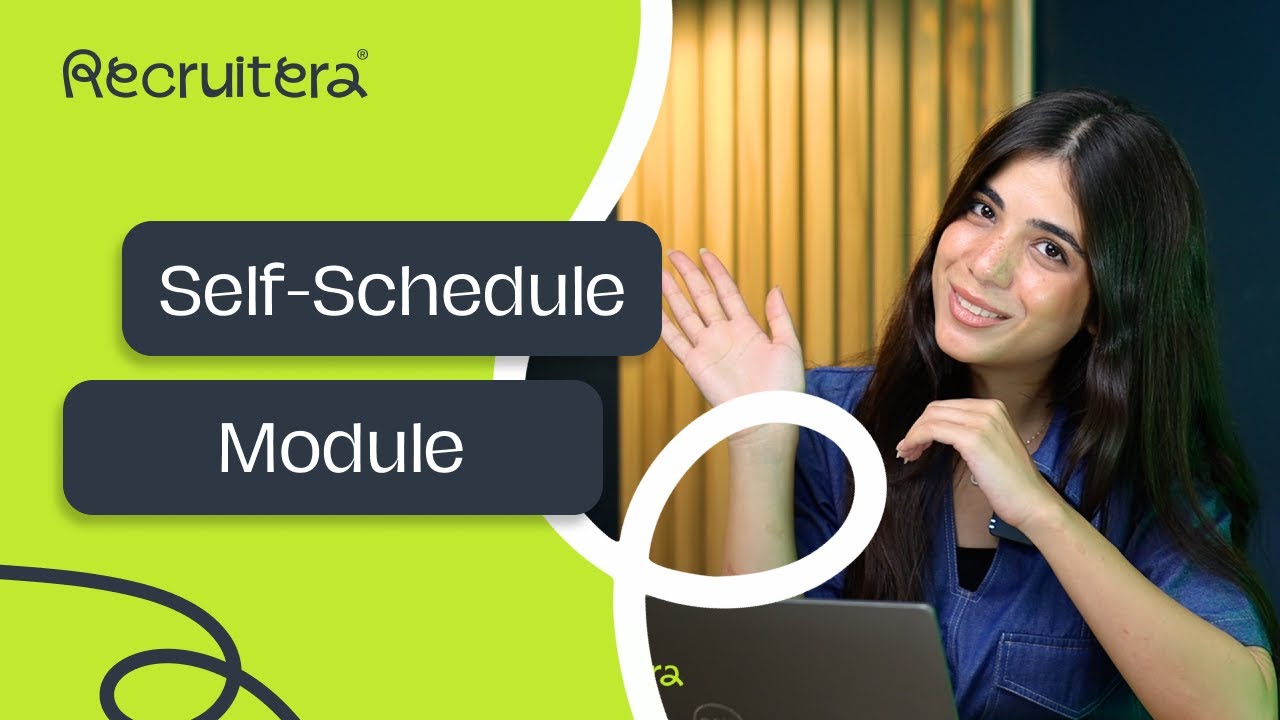
In this walkthrough, you’ll see:
- How to sync calendars with Google or Outlook
- How to create interview slots based on team availability
- How candidates book interviews through self-scheduling
- How reminders and confirmations are automated
Best Practices for Interview Scheduling
Even with strong tools, process still matters. Here are practical best practices hiring teams follow:
🔹Define standard interview durations per role
Know in advance how long each interview stage should take. This makes slot generation faster and more consistent.
🔹Block recurring availability windows weekly
Instead of checking calendars constantly, set standing availability blocks (e.g., Tuesdays and Thursdays, 10 AM–4 PM) for interviews.
🔹Use structured interview templates
Standardize your interview stages so scheduling becomes repeatable, not custom every time.
🔹Set internal SLAs for scheduling turnaround
Commit to scheduling within 24–48 hours of candidate availability. Speed signals respect.
🔹Keep communication centralized in one system
Don’t scatter scheduling across email, Slack, and calendar apps. Keep everything in your ATS so context is never lost.
Interview scheduling should be part of your hiring strategy—not an afterthought.
Why Interview Scheduling Is Strategic, Not Administrative
Many teams underestimate interview scheduling because it feels operational. But it directly influences:
- Time to hire – Faster scheduling means faster hiring cycles
- Candidate experience – Smooth scheduling reflects a well-run organization
- Offer acceptance rates – Candidates remember how the process felt
- Internal alignment – Clear scheduling reduces friction between recruiters and hiring managers
- Recruiter workload – Automated coordination frees up time for actual talent work
When scheduling is smooth, hiring feels smooth. When scheduling is chaotic, hiring feels chaotic—even if everything else is strong.
Final Thoughts
Interview scheduling should not be the bottleneck in your hiring process.
With structured workflows, real-time calendar sync, and candidate self-scheduling, hiring teams can eliminate unnecessary coordination and focus on what actually matters—evaluating the right talent.
In 2026, speed and structure win.
And often, that advantage starts with something as simple—and as overlooked—as interview scheduling.
Without structured tools, interview scheduling can take 3–5 days per round due to back-and-forth emails, calendar conflicts, and timezone coordination. With self-scheduling and calendar sync, this drops to minutes.
Yes. Modern self-scheduling tools can coordinate availability across multiple interviewers simultaneously, showing candidates only the time slots where all required panel members are free.
Depending on your system settings, candidates can either reschedule directly through the same link or request a reschedule, which the recruiter then approves. This keeps the process structured without creating new email threads.
Interview scheduling software is built specifically for hiring workflows. It is embedded in your ATS, syncs with hiring team calendars, supports multi-stage interviews, and tracks scheduling status inside your candidate pipeline—features standalone calendar tools don’t offer.
Calendar sync pulls real-time availability from Google Calendar or Outlook. If a hiring manager books a personal meeting or another interview, that time slot automatically becomes unavailable for new bookings, preventing conflicts before they happen.